
Geo-targeted banner advertising allows marketers to tailor their messages based on the geographic location of their audience, creating a more personalized and relevant experience. By utilizing data about users’ locations, businesses can engage customers with ads that resonate with their specific needs and preferences.
This innovative approach not only boosts engagement but also significantly enhances conversion rates, as it connects users with offers and promotions that matter most to them. Whether it’s a local restaurant running ads to nearby residents or an e-commerce site showcasing products relevant to specific regions, geo-targeted ads are reshaping the landscape of online marketing.
Geo-targeted Banner Advertising
Geo-targeted banner advertising is a strategic approach in the realm of online marketing that utilizes geographical information to deliver tailored advertisements to specific audiences. By analyzing the location of users, businesses can present relevant ads that resonate more with potential customers, making their marketing efforts more effective and efficient. This technique is particularly relevant as it enhances user experience by showing them products or services that are available in their vicinity.Geo-targeted banner ads are instrumental in increasing both engagement and conversion rates.
By ensuring that the content is location-specific, marketers can capture the attention of users who are more likely to be interested in their offerings. This method not only leads to higher click-through rates but also fosters a sense of relevance and personalization. When customers see ads that cater to their immediate needs or interests based on their location, they are more inclined to engage with the ad and convert into paying customers.
Benefits of Geo-targeted Banners
The advantages of using geo-targeted banner advertising are multi-faceted and can significantly influence the success of marketing campaigns. First and foremost, targeted advertising reduces wasted impressions, ensuring that businesses only reach individuals who are likely to convert. Furthermore, these banners can promote time-sensitive offers that are geographically relevant, creating a sense of urgency among local customers.
- Increased Relevance: Ads tailored to a user’s location can present local events, sales, or services, making them more appealing and relevant.
- Higher Engagement Rates: Users are more likely to interact with ads that directly relate to their immediate surroundings, boosting overall engagement.
- Improved Conversion Rates: By targeting potential customers in specific locations, businesses often see higher conversion rates as the offers resonate more with local needs.
- Cost Efficiency: Geo-targeting helps in optimizing ad spend by focusing on high-potential markets, leading to a better return on investment.
Successful Geo-targeted Campaigns
Several brands have successfully implemented geo-targeted banner advertising campaigns, showcasing the effectiveness of this marketing strategy. These examples illustrate how location-based advertising can significantly enhance customer engagement and conversion.One notable case is that of Starbucks, which has effectively used geo-targeted ads to promote new store openings and special offers to potential customers in proximity. By utilizing location data, Starbucks ensures that individuals in the right geographic areas receive notifications and promotions directly on their devices, thereby driving foot traffic to their stores.Another example is Coca-Cola, which launched a geo-targeted campaign during the summer to promote their products at local events and festivals.
By directing ads to users attending these events, Coca-Cola was able to synchronize their marketing efforts with consumer behaviors, leading to higher sales during peak seasons.
“Geo-targeted advertising is not just about reaching customers; it’s about reaching the right customers at the right time.”
Integration with Other Marketing Channels
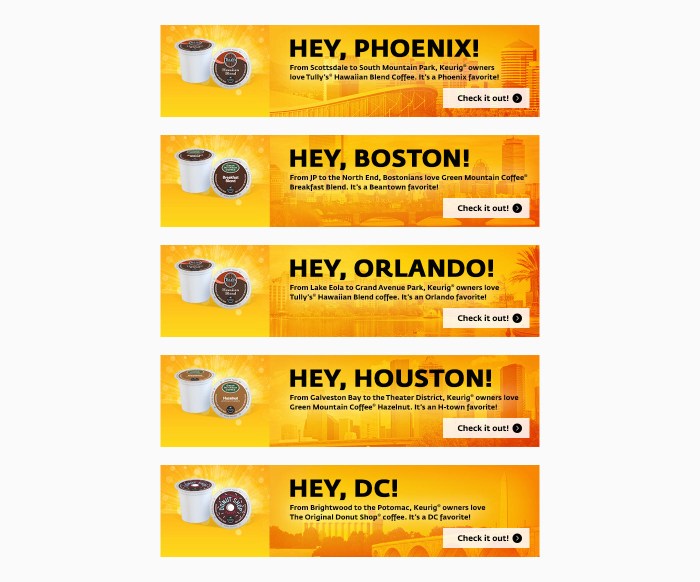
Geo-targeted banner advertising is not just a standalone strategy; it can work in harmony with various marketing channels to create a cohesive and powerful marketing ecosystem. By integrating this form of advertising with email marketing, social media, and e-commerce strategies, businesses can enhance their overall effectiveness and drive better results. This interconnected approach ensures that brands remain relevant and engaging to their target audiences while optimizing their marketing spend.
Email Marketing Synergy
Geo-targeted banner ads can enhance email marketing campaigns by providing a visual element that supports and reinforces email messages. When users receive a targeted email, seeing relevant banner ads during their online browsing can significantly increase brand recall and engagement. This tactic can also personalize the customer experience, as the banners can reflect the geographical location of the users, showcasing local events, promotions, or store openings.
For instance, if an email promotes a seasonal sale at a local store, pairing it with geo-targeted banners that display exclusive offers related to that sale can encourage immediate action. The combination of personalized email content and contextually relevant banners creates a seamless user experience, which can lead to higher conversion rates.
Social Media Marketing Connection
Integrating geo-targeted banner advertising with social media marketing can amplify a brand’s reach and effectiveness. Social platforms offer rich targeting options, and when combined with geo-targeted banners, brands can create highly relevant ads that resonate with local audiences. By running simultaneous campaigns on social media and displaying geo-targeted banners, businesses can create a unified message across multiple touchpoints.The ability to retarget users who have interacted with social media ads using geo-targeted banners allows brands to keep their messages in front of potential customers even when they leave social platforms.
For example, a restaurant promoting a new menu item on Instagram can follow up with banner ads showcasing the same item and offering nearby users a discount for dining in. This consistent messaging strengthens brand presence and encourages user engagement.
E-commerce Strategy Combination
Geo-targeted banner advertising can be seamlessly integrated into e-commerce strategies to drive sales and enhance customer experience. By utilizing location data, e-commerce businesses can display ads that highlight products available in the user’s vicinity, thereby creating urgency and convenience. This technique is particularly effective for businesses with physical locations, as it directs online traffic to local stores.For effective integration, businesses can employ the following strategies:
- Dynamic product ads: Showcase products specific to the user’s location, highlighting local availability and promotions.
- Time-sensitive promotions: Use geo-targeted banners to announce flash sales or limited-time offers that encourage immediate purchases.
- Local events integration: Promote events or in-store experiences related to the e-commerce offer, creating a buzz around the local brand presence.
Through these methods, geo-targeted banners become an essential tool for driving traffic to e-commerce sites, ultimately enhancing sales and fostering customer loyalty.
Tools and Technologies for Implementation
Geo-targeted banner advertising leverages advanced technologies to deliver personalized ads to specific geographical locations, enhancing relevance and engagement. The implementation of this targeted approach involves several tools and platforms that facilitate the creation, management, and optimization of geo-targeted ad campaigns.Various technologies play a pivotal role in the development of geo-targeted banner ads. These technologies include location tracking software, data analytics platforms, and advertising networks that specialize in geo-targeting.
By using GPS data, IP address tracking, and user behavior analytics, marketers can effectively pinpoint their target audience based on geographic regions.
Technologies for Creating Geo-Targeted Ads
The following technologies are essential for creating effective geo-targeted banner ads:
- Location-Based Services (LBS): LBS utilizes GPS and cellular data to determine a user’s location, allowing marketers to show ads relevant to their surroundings.
- Real-Time Bidding (RTB): RTB platforms enable advertisers to bid on ad space in real-time, ensuring that geo-targeted ads reach users at the right moment.
- Data Management Platforms (DMPs): DMPs collect and analyze vast amounts of data, helping advertisers create detailed audience segments based on location and behavior.
- Geofencing Technology: This technology allows marketers to set virtual boundaries around a physical location, triggering ads when users enter these areas.
Platforms Offering Geo-Targeting Capabilities
Several online advertising platforms provide robust geo-targeting capabilities, enabling businesses to reach their desired audience effectively. These platforms include:
- Google Ads: Offers geo-targeting settings that allow advertisers to choose specific locations where their ads will appear.
- Facebook Ads: Provides detailed targeting options based on user location, interests, and demographics.
- AdRoll: A platform that specializes in retargeting and geo-targeting, helping businesses reach users who have previously interacted with their brand.
- Adobe Advertising Cloud: Integrates various data sources to create geo-targeted campaigns across multiple channels.
Best Practices for Designing Effective Geo-Targeted Banner Ads
Implementing geo-targeted banner ads requires adherence to best practices to maximize effectiveness. Consider the following guidelines:
- Localize Content: Tailor ad messaging and visuals to resonate with local audiences, incorporating relevant local culture and language.
- Utilize Strong Call-to-Actions (CTAs): Encourage immediate action by using clear and compelling CTAs that reflect local promotions.
- Test and Optimize: Continuously test different ad designs, messages, and targeting parameters to identify what works best for specific locations.
- Ensure Mobile Compatibility: Given the prevalence of mobile usage, ads should be optimized for mobile devices to enhance user experience.
Last Point
In summary, geo-targeted banner advertising is a powerful tool that enables brands to connect with their audience on a more personal level. By leveraging location data, businesses can create compelling campaigns that drive engagement and increase sales. As the digital marketplace continues to evolve, incorporating geo-targeting strategies will be essential for staying ahead in the competitive advertising landscape.
FAQ Section
What is the main benefit of geo-targeted banner advertising?
The primary benefit is that it allows businesses to deliver tailored ads to users based on their specific geographic location, increasing relevance and engagement.
How can geo-targeted ads improve conversion rates?
By presenting users with offers and messages that are locally relevant, geo-targeted ads can lead to higher engagement and ultimately better conversion rates.
What tools can be used for creating geo-targeted ads?
Several platforms, including Google Ads and Facebook Ads, offer geo-targeting capabilities to help marketers create effective location-based campaigns.
Can geo-targeted ads be integrated with social media marketing?
Yes, integrating geo-targeted ads with social media marketing can enhance campaign effectiveness by reaching users in specific locations through targeted posts and advertisements.
Are there best practices for designing geo-targeted banner ads?
Best practices include using clear, location-specific messaging, eye-catching designs, and strong calls to action to encourage user interaction.


